Description
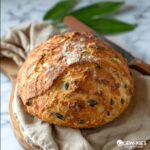
This Bärlauchbrot aus dem Topf is a flavorful wild garlic bread made with a blend of spelt and wheat flours, prepared without kneading for ease. The dough undergoes a slow fermentation to develop deep flavors and is baked in a preheated cast iron pot for a rustic crust and tender crumb. Perfect served warm, this aromatic bread showcases seasonal wild garlic and offers a wholesome, homemade delight.
Ingredients
Scale
Wet Ingredients
- 375 g Buttermilch (vegan alternative in notes)
- 30 g Olivenöl
Dry Ingredients
- 8 g fresh yeast (for overnight fermentation) or 25 g fresh yeast (for 1-hour proofing)
- 1.5 tsp Sugar
- 320 g Spelt flour (type 630)
- 230 g Wheat flour (type 550)
- 2.5 tsp Salt or wild garlic salt (Bärlauchsalz)
- 20 – 25 wild garlic leaves (finely chopped)
Instructions
- Activate yeast: Combine the buttermilk, fresh yeast, and sugar in a mixing bowl or mixer bowl and mix well. Let it stand for a while so the yeast can dissolve and become active.
- Mix dough: Add all the remaining ingredients to the yeast mixture. Knead the dough for about 4 minutes until well combined and elastic. This step can be done in a stand mixer or by hand.
- Fermentation: Transfer the dough into a greased bowl. Cover and let it rise either for 1 hour at room temperature if using 25 g of yeast, or refrigerate overnight (approximately 12-14 hours) using 8 g yeast for a longer fermentation.
- Shape and prepare for baking: After fermentation, wet your hands and fold the dough in the bowl 10 times to develop structure. Shape the dough into a round loaf and place it into a banneton (proofing basket). Meanwhile, preheat the oven and place a cast iron pot or Dutch oven with its lid inside to heat up.
- Transfer to pot: When the oven has reached temperature, carefully turn the dough onto a sheet of parchment paper. Using the paper, lower the dough into the hot cast iron pot. This helps retain shape and creates steam inside the pot for a perfect crust.
- Baking phase 1: Bake at 240°C (top and bottom heat) for 30 minutes with the lid on. This traps steam and aids crust development.
- Baking phase 2: Remove the lid and continue baking for another 10 minutes at 200°C. Keep an eye on the bread to ensure it doesn’t get too dark.
- Cool and serve: Let the bread cool slightly then enjoy warm for the best flavor and texture.
Notes
- For a vegan version, substitute buttermilk with a plant-based milk mixed with a little vinegar or lemon juice to mimic acidity.
- The long, cold fermentation enhances flavor and digestibility of the bread.
- Using a cast iron pot creates a steamy environment essential for bread with a crisp crust.
- The wild garlic can be swapped with fresh herbs like chives or parsley if unavailable.